
See the signs of an infected circumcision, how it differs from normal healing, and when to get help. Speak to our Birmingham clinic.


If you are wondering what an infected circumcision looks like, you are not alone. Most circumcisions heal well, whether the procedure was for a newborn, a child or an adult. Even so, it is natural to keep a close eye on the area and to worry when something does not look quite right.
This guide explains the common signs of infection, how to tell normal healing apart from a problem, and when to seek help. It is written to reassure, not to alarm. A circumcision usually takes around four to six weeks to heal fully1, so some changes during that time are expected. Knowing which changes are normal can help you feel calmer and act quickly if you do need advice.
What does an infected circumcision look like
An infected circumcision often looks redder, more swollen and more painful a few days after the procedure, rather than steadily getting better. The main warning signs to look for are:
- redness that spreads outwards from the wound rather than fading
- thick yellow or green discharge, or pus, especially if it smells unpleasant
- swelling or pain that gets worse after the first two to three days
- skin that feels hot to the touch
- a high temperature (fever), or a baby who is unusually unsettled or feeding poorly
- bleeding that does not stop with gentle pressure
If you notice any of these signs, contact a clinician promptly. The sections below explain each sign in more detail and show how it differs from normal healing.
Normal healing versus infection
In the first few days, some redness, mild swelling and tenderness are part of normal healing.2 A yellow or white film over the tip can also be a normal part of healing, not pus.3 The table below shows the difference at a glance.
| What you notice | Usually normal healing | Possible infection |
|---|---|---|
| Redness | Mild redness around the wound that slowly fades | Redness that spreads outwards or up the shaft |
| Discharge | A thin yellow or white film over the tip | Thick yellow or green pus, often with a smell |
| Swelling and pain | Some swelling and soreness that eases after a few days | Swelling or pain that increases after day two or three |
| General health | Comfortable, feeding and weeing as usual | Fever, feeling very unwell, or a baby who will not settle or feed |
Signs of infection after circumcision
These are the most common infected circumcision symptoms to watch for. One sign on its own may be minor, but several together, or any that are getting worse, should prompt a call to a clinician.
Spreading redness and warmth
A little redness around the wound is normal at first. Redness that spreads outwards, moves up the shaft, or makes the skin feel hot can be a sign of infection and needs review.4
Pus or unusual discharge
A thin yellow or white film over the tip is usually normal healing tissue, not pus. Parents often contact us worried about this film. It is not an infection. Thick yellow or green discharge, particularly with an unpleasant smell, is a more reliable sign of infection.5
Swelling that is not settling
Swelling normally peaks in the first few days and then eases. Swelling that keeps increasing after day two or three, or that comes with growing pain, can suggest infection rather than ordinary healing.
Persistent bleeding
Light spotting in the early days is common. Bleeding that does not stop after a few minutes of gentle, firm pressure, or that soaks through dressings, needs urgent advice.
Difficulty passing urine
Pain when weeing, straining, or passing much less urine than usual can point to swelling or infection. This should be checked quickly, especially in babies and young children.
Signs of an infected circumcision in a newborn or baby
Babies cannot tell you how they feel, so changes in behaviour matter as much as how the wound looks. When you are checking the signs of an infected circumcision in a newborn, look at the whole baby, not just the area.
Contact a clinician or seek urgent care if your baby has any of the following:
- a temperature of 38°C or above, or a baby who feels very hot or very cold
- spreading redness, fast-increasing swelling, or smelly discharge
- much less feeding than usual, or far fewer wet nappies
- constant crying that you cannot settle, or a baby who is floppy or hard to wake
- the tip of the penis turning dark blue, black or grey
A fever in a baby under three months is always a reason to seek urgent medical help.6 Trust your instincts: if your baby simply does not seem right, it is always worth getting them checked.
How to know if your circumcision is infected (adults and teens)
If you are an adult or teenager recovering at home, the simplest test is the direction of travel. Healing should feel a little better each day. Pain, redness and swelling that are improving are reassuring. Anything that is clearly getting worse deserves attention.
Ask yourself these questions:
- Is the redness or swelling spreading rather than fading?
- Is there thick, smelly or coloured discharge?
- Is the pain getting worse, or no longer eased by simple pain relief?
- Do you have a high temperature or feel generally unwell?
When in doubt, call.
If you answer yes to any of these, contact your clinic, GP or NHS 111 for advice. An infection is often treated simply with antibiotics when it is caught early.7
What causes infection, and how to lower the risk
Most infections happen when bacteria enter the healing wound. The risk is higher when the area is not kept clean and dry, when nappies or clothing rub the site, or when aftercare advice is not followed closely. Babies are watched carefully because their skin is delicate and they cannot tell you when something hurts.
Even with careful aftercare, a small number of circumcisions do develop a minor wound infection. This does not mean something went wrong. It means the body needs a little extra help, and early treatment almost always sorts it quickly.
The good news is that simple steps make a real difference. The aim is to keep the area clean, reduce friction, and give the wound time to heal without interference.
Simple steps that help include:
- Wash your hands before touching the area or changing a dressing
- Keep the wound clean and dry, and follow the bathing advice you were given
- Use a barrier such as petroleum jelly if advised to stop the wound from sticking to nappies or clothing
- Choose loose, soft clothing and change nappies often
- avoid swimming and rough activity until the area has fully healed, usually around four to six weeks
The aftercare sheet you were given at your appointment is the place to start if anything worries you. If you are ever unsure, it is better to ask than to guess.
How is an infected circumcision treated?
If an infection is confirmed, treatment is usually straightforward, especially when it is caught early. A clinician will examine the area and decide what is needed based on how the wound looks and how you or your child is feeling.
Mild infections
A mild wound infection is often treated with a short course of antibiotics, sometimes as a cream and sometimes as tablets or liquid. Your clinician will explain how to use any medicine and what improvement to expect.
More serious infections
More serious infections are uncommon, but they need prompt care. Very rarely, a deep infection can spread. This is why spreading redness, a high fever, or a very unwell baby should always be treated as urgent.7 Early review almost always means simpler treatment and a smoother recovery.
How healing usually progresses
Knowing the usual pattern of healing makes it easier to spot when something is not right. The exact timeline can vary with age and the method used, so treat the following as a general guide rather than a fixed rule.
The first few days
Expect some redness, mild swelling and tenderness. The tip may look red, shiny, or slightly purple, and a thin yellow or white film can form. These are normal and usually settle over the first week.
The first two weeks
Swelling slowly eases, and any scabbing begins to clear. Mild discomfort during this time is common, particularly for adults. The area should look a little better, not worse, as each day passes.
Full healing
Full healing usually takes around four to six weeks.1 If at any point the redness, swelling, pain or discharge start to increase rather than fade, it is worth a quick check with a clinician.
Healing can look a little different for a newborn, an older child, a teenager and an adult, and the method used can also change how things look day to day. If the appearance ever worries you, comparing it against the normal signs above and against the photos or notes from your clinic can help you decide whether to seek advice.
When to seek help
Knowing where to turn can save worry. Use the following as a general guide, and always follow any specific advice from the team who carried out the procedure.
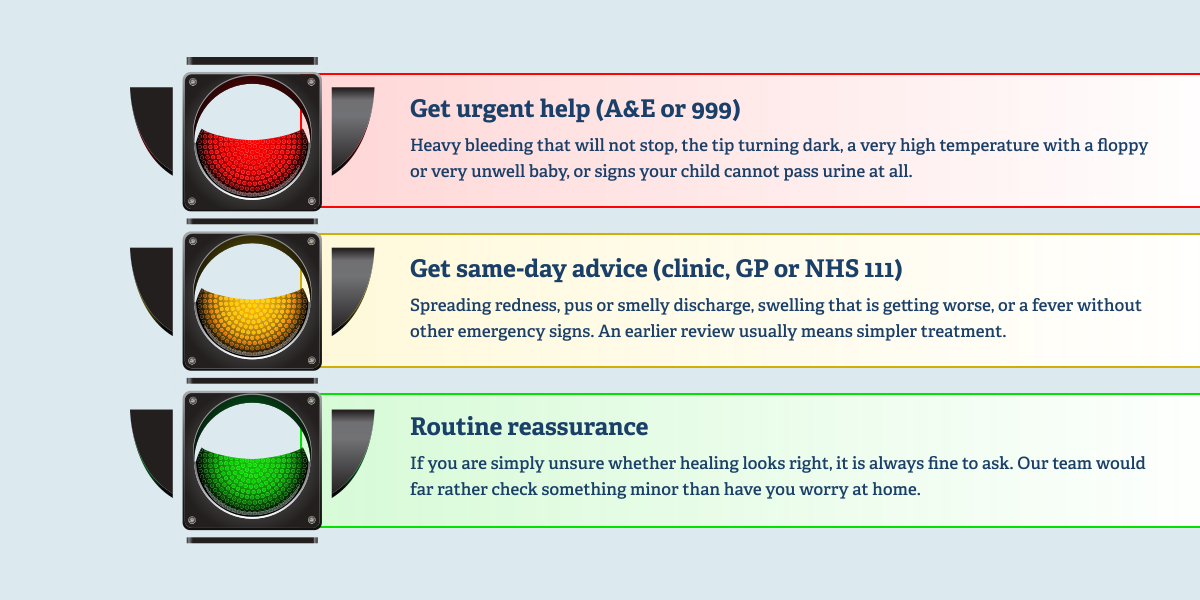
Get urgent help (A&E or 999)
Heavy bleeding that will not stop, the tip turning dark, a very high temperature with a floppy or very unwell baby, or signs your child cannot pass urine at all.
Get same-day advice (clinic, GP or NHS 111)
Spreading redness, pus or smelly discharge, swelling that is getting worse, or a fever without other emergency signs. An earlier review usually means simpler treatment.
Routine reassurance
If you are simply unsure whether healing looks right, it is always fine to ask. Our team would far rather check something minor than have you worry at home.
- Circumcision
Worried about healing?
If something does not look right after a circumcision, you do not have to wait and wonder. Contact us for a specialist review and clear, reassuring advice.
How our clinic supports you after circumcision
Good aftercare lowers the risk of infection and helps you spot problems early. At our Birmingham clinic, every circumcision uses the Pollock Technique under local anaesthetic, and the same doctor looks after you from consultation through to follow-up.

Before you go home, we show you how to care for the area and what to watch for, and you leave with written aftercare instructions and our direct contact details. You also receive a doctor’s contact number so you can reach us with any concern about bleeding, appearance or comfort. Around day seven, parents can send clear photos through our secure system so the doctor can review healing and arrange a check-up if needed.
You can read our step-by-step newborn circumcision aftercare guide and our circumcision aftercare advice for boys and teens for what normal healing should look like at each stage. For a wider look at healing problems, see our guide on what a bad circumcision looks like.
Frequently asked questions
Can a circumcision get infected?
Yes, although it is uncommon when the procedure is carried out by an experienced clinician and good aftercare is followed. Most cases are mild and respond well to early treatment.
How common is infection after circumcision?
Serious complications are rare. Minor wound infections are among the more frequent issues, but they are usually straightforward to manage when spotted early.
Is yellow discharge after circumcision normal or a sign of infection?
A thin yellow or white film over the tip is usually normal healing tissue. Thick yellow or green discharge, especially with a smell, is more likely to suggest infection and should be checked.
What does an infected newborn circumcision look like?
In babies, look for spreading redness, increasing swelling, smelly discharge, or the tip changing to a dark colour, along with fever, poor feeding or constant crying. Any of these need prompt medical review.
How is an infected circumcision treated?
Treatment depends on the cause and severity. A clinician will assess the area and may prescribe antibiotics. Most early infections settle quickly with the right care.
How long after circumcision can an infection appear?
Infection most often shows in the first week, when redness, swelling or discharge start to worsen rather than improve. If symptoms appear or change at any point during healing, it is sensible to seek advice.
Speak to our team
If you are concerned about healing after a circumcision, for yourself or your child, our Birmingham clinic offers specialist reviews with same-day appointments and no GP referral needed. Contact us to book a consultation and get clear, reassuring advice from a doctor who will assess your individual situation.
References
- NHS. Circumcision in men. Healing time after circumcision.
- NHS Trust patient information (West Suffolk NHS Foundation Trust). Circumcision in children, post-surgery advice. Signs of infection.
- Seattle Children’s Hospital. Circumcision problems. Normal healing versus infection.
- Seattle Children’s Hospital. Circumcision problems. Spreading redness.
- NHS Trust patient information (Milton Keynes University Hospital). Circumcision, a parent or carer’s guide.
- NHS. Fever in children and when to get urgent help.
- Stanford Medicine. Complications of circumcision. Infection and treatment