

You may have noticed a band of skin joining the shaft of the penis to the head. Perhaps you feel pulling or tugging during an erection, or discomfort during intercourse. You may also notice that an area doesn't look or feel right after circumcision. These changes may be signs of a penile skin bridge.
A skin bridge is a band of tissue that has healed between the shaft skin and the head of the penis. Some cause very little difficulty. Others can cause pulling, discomfort, problems with cleaning, or concerns about appearance. At Gentle Procedures UK, the first step is a private consultation with one of our doctors. We will examine the area and confirm whether it is a skin bridge. We will then explain whether treatment is needed and what options are available.
A penile skin bridge is a band of tissue that joins the skin of the shaft to the head of the penis, which doctors call the glans. It forms when skin heals in the wrong place, so the two stay attached. Often there is a small gap or tunnel underneath the band.
Skin bridges vary from one man to the next. Some are thin and easy to miss, while others are thicker and more obvious. Some men have one bridge, and some have more than one. A skin bridge is a structural change, not an infection. It doesn't come and go, and it can be present without any symptoms.
A skin bridge can form after circumcision at any age. In children, it might go unnoticed. Some men first notice one as teenagers or adults, when an erection or sex causes the band to pull.
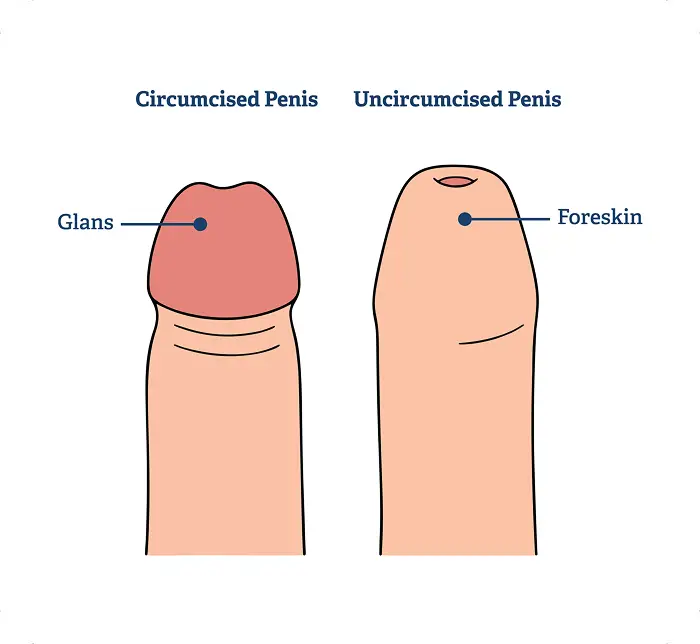
Swelling, irritation or infection while the skin is healing can make raw surfaces stick together.
When the cut edge of the shaft skin heals against the head of the penis, the two surfaces can become attached. This can leave a band of skin joining the shaft to the head.
Early adhesions, where skin sticks to the head of the penis, do not always separate on their own. Some thicken into a band.
If loose skin sits against the head of the penis while it heals, the two surfaces can stick together. The band can then become more firmly attached over time.
Some people form more scar tissue than others. Extra scarring can pull the edges of the skin together and hold them there.
A skin bridge can also follow surgery on the penis other than circumcision. An injury to the area can have the same effect.
At Gentle Procedures UK, you will be seen by one of our doctors in a private consultation room at our CQC-registered Birmingham clinic. Your consultation is private, discreet and unhurried, so you have time to explain exactly what you've noticed.
Your doctor will ask whether you're experiencing discomfort and about any previous circumcision or penile surgery before examining the area. They'll confirm whether you have a skin bridge and assess its size, position and whether it is causing any functional or cosmetic concerns. If treatment is appropriate, we'll explain the options and costs before anything is booked. You and your doctor will decide together whether treatment is necessary.

If treatment is appropriate, the options depend on the size and position of the bridge and whether there is more than one. Your doctor will explain which option is suitable after examining you.
Skin bridge release divides the band of tissue, so the shaft skin is no longer attached to the head of the penis.
Circumcision revision reshapes or removes some of the remaining skin after an earlier circumcision. It's usually performed in more complex cases, for example where there is more than one bridge or more extensive scarring, when it's clinically appropriate.
Private. Discreet. Doctor-Led.
We understand that concerns about the appearance or function of the penis can be difficult to discuss. Our doctors regularly assess penile and post-circumcision concerns in a private, professional environment. There is no assumption that you need treatment.

A penile skin bridge is a band of tissue that joins the shaft skin to the head of the penis. It forms when skin heals in the wrong place, most often after circumcision. Some cause no trouble, while others cause pulling or discomfort.
They form when two areas of healing skin join together. This most often happens after circumcision, but it can follow other penile surgery. Healing varies from person to person, and a doctor can explain what they see during your examination.
You may see a band of skin joining the shaft to the head, sometimes with a small gap underneath. You may also feel pulling during erections. Only a doctor can confirm it, because other changes can look similar.
A skin bridge may not go away on its own, because it is a band of healed tissue. That does not always mean it needs treatment. A doctor can tell you whether treatment would help in your case.
Your doctor will ask about your symptoms and any previous circumcision or penile surgery, then examine the area in private. They will confirm whether it is a skin bridge and explain your options. No treatment is booked until you have had the chance to discuss it.
No. Pulling or cutting at a skin bridge can cause pain, bleeding and infection, and make things worse. Please speak to a doctor instead.
Yes. The band can pull on the head of the penis when it is erect. This can cause tugging, pain or catching during sex or masturbation. If this is happening, it is a good reason to see a doctor.
A skin bridge may not go away on its own. That does not mean every skin bridge needs treatment. Whether to treat it depends on your symptoms. Your doctor will consider any pulling or tethering, problems with cleaning, discomfort, and how much the appearance concerns you. Some men have a bridge that causes no trouble and decide to leave it alone.
Yes. A skin bridge can form after circumcision in childhood, and it is sometimes not noticed until later. If you are worried about your son, a doctor can examine him and explain what they find.









We use cookies and similar technologies to enhance your browsing experience and analyse website traffic. By consenting, you allow us to collect data such as device details and browsing behaviour, helping us improve how our site functions. You can withdraw or manage your consent at any time, but some features may not work properly without it.